Workshop
An R-for-Archaeology Buffet
This document compiles useful approaches, tips, and tricks for using R with archaeological data. Example data used are from Drennan [-@Drennan2009] unless otherwise specified. This …
•
1 min read
This document compiles useful approaches, tips, and tricks for using R with archaeological data. Example data used are from Drennan [-@Drennan2009] unless otherwise specified. This …
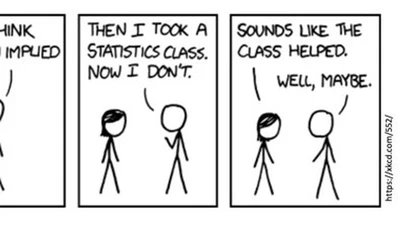
This course introduces students to the basic quantitative methods required to describe and analyze archaeological data. Each week, students will be introduced to a new statistical …
One of an archaeologist’s most common challenges is struggling with an uncooperative dataset. Sometimes you might have no-oone to blame but yourself, and other times you may be …
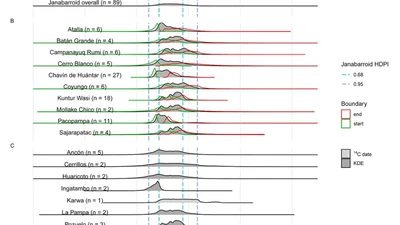
Using the Central Andean Chavín Phenomenon as a case study, this paper explores the middle ground between top-down (big data) and bottom-up (Bayesian modeling) approaches to …

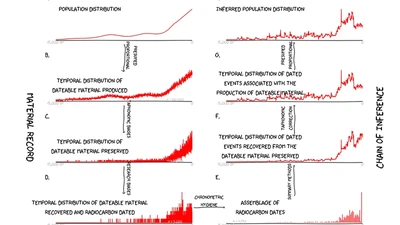
We illustrate the way in which landscape taphonomy predictably complicates “dates-as-data” approaches, propose and demonstrate a new method of empirically based correction, and …
The documentation and analysis of archaeological lithics must navigate a basic tension between examining and recording data on individual artifacts or on aggregates of artifacts. …
This paper explores the relationship between past climate and prehistoric Mediterranean agriculture by adapting a process-based dynamic vegetation model to estimate potential …
Holocene climate variability in the Mediterranean Basin is often cited as a potential driver of societal change, but the mechanisms of this putative influence are generally little …
Assessing the implications of paleoclimatic and paleoenvironmental data at temporal and spatial scales that would have directly intersected with human decision-making and activity …
The logic of using summed radiocarbon (14C) calibrations (cumulative probability density functions for large numbers of calibrated 14C dates) as proxies for past populations rests …